Shandong Taixing Advanced Material Co., Ltd.
News

What Is Decabromodiphenyl Ethane and Why Is It the Preferred Flame Retardant in Modern Industries

2026-03-18 0 Leave me a message

Decabromodiphenyl Ethane (DBDPE) has rapidly become one of the most important brominated flame retardants used across industries such as plastics, electronics, textiles, and construction. As environmental regulations tighten and performance expectations increase, manufacturers are actively seeking safer and more stable alternatives to traditional flame retardants.

In this comprehensive guide, we explore what Decabromodiphenyl Ethane is, its chemical properties, applications, advantages, environmental impact, and why companies like Taixing are leading innovation in this field. Whether you're a manufacturer, engineer, or procurement specialist, this article provides actionable insights to help you make informed decisions.

Decabromodiphenyl Ethane

Table of Contents


What Is Decabromodiphenyl Ethane?

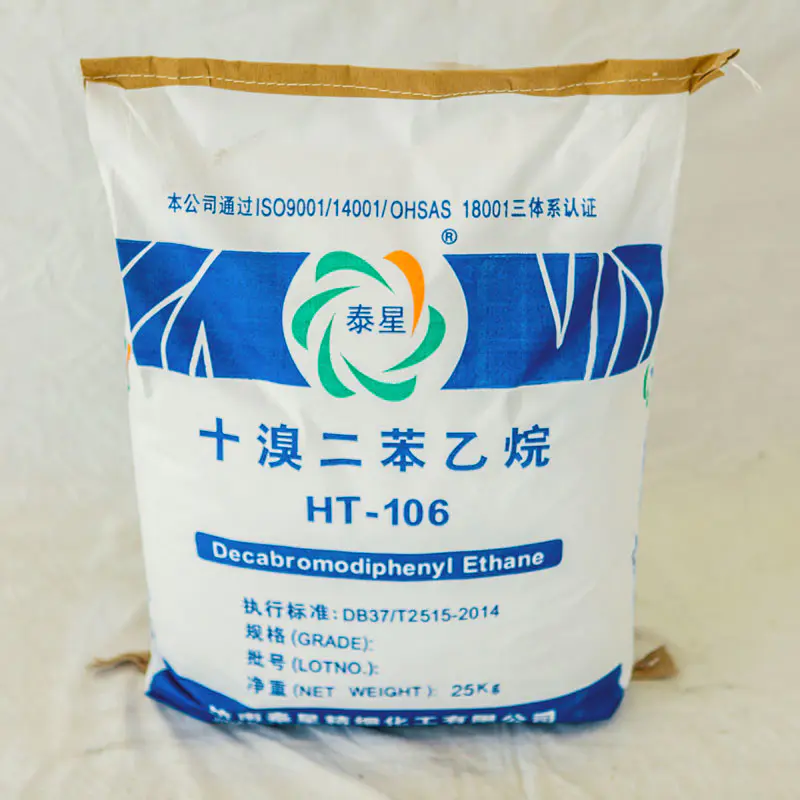
Decabromodiphenyl Ethane (DBDPE) is a high-performance brominated flame retardant widely used as a replacement for Deca-BDE due to its improved environmental profile and thermal stability.

  • Chemical Formula: C14H4Br10
  • Appearance: White powder
  • Function: Flame retardant additive
  • Applications: Plastics, textiles, electronics

It is particularly valued for its high bromine content, which enhances flame resistance while maintaining material integrity.


Chemical Properties and Structure

Property Value
Molecular Weight 971.22 g/mol
Bromine Content ~82%
Melting Point >300°C
Solubility Insoluble in water
Thermal Stability Excellent

Its highly brominated structure allows it to release bromine radicals when exposed to heat, interrupting the combustion process and effectively suppressing flames.


Key Applications Across Industries

1. Plastics Industry

  • Polypropylene (PP)
  • Polyethylene (PE)
  • Polystyrene (PS)

2. Electronics

  • TV housings
  • Computer casings
  • Wiring insulation

3. Textiles

  • Upholstery fabrics
  • Protective clothing

4. Construction Materials

  • Insulation panels
  • Cables and pipes

Manufacturers like Taixing provide high-purity DBDPE tailored for these diverse industrial needs.


Advantages Over Traditional Flame Retardants

  • High Thermal Stability: Suitable for high-temperature processing
  • Low Toxicity: Improved environmental profile
  • Excellent Compatibility: Works well with polymers
  • Low Migration: Stays within materials longer
  • Cost Efficiency: Competitive pricing

These benefits make DBDPE a preferred choice for manufacturers transitioning away from older flame retardants.


DBDPE vs Deca-BDE Comparison

Feature DBDPE Deca-BDE
Environmental Impact Lower Higher
Thermal Stability Excellent Moderate
Regulatory Compliance More compliant Restricted
Durability High Moderate

Due to regulatory pressure, DBDPE has become the go-to alternative in many regions worldwide.


Environmental and Safety Considerations

Modern industries are increasingly concerned with sustainability and environmental impact. DBDPE offers:

  • Low bioaccumulation potential
  • Reduced environmental persistence
  • Compliance with global regulations

However, proper handling and disposal are still essential to minimize environmental risks.


Manufacturing and Quality Control

High-quality DBDPE production involves strict quality control measures:

  • Advanced bromination processes
  • Purity testing
  • Particle size control
  • Thermal stability testing

Leading manufacturers like Taixing ensure consistent product quality through advanced production technologies.


How to Choose the Right Supplier

When selecting a DBDPE supplier, consider the following:

  • Product purity and consistency
  • Certifications and compliance
  • Technical support
  • Supply chain reliability
  • Pricing competitiveness

Working with a trusted supplier like Taixing ensures long-term reliability and performance.


Future Trends in Flame Retardants

The flame retardant industry is evolving rapidly, driven by:

  • Stricter environmental regulations
  • Demand for halogen-free alternatives
  • Advancements in material science

While halogen-free solutions are gaining traction, DBDPE remains highly relevant due to its balance of performance and safety.


Frequently Asked Questions (FAQ)

1. Is Decabromodiphenyl Ethane safe?

Yes, when used correctly, it is considered safer than many traditional flame retardants and complies with international standards.

2. Why is DBDPE replacing Deca-BDE?

Due to environmental concerns and regulatory restrictions, DBDPE is a more sustainable alternative.

3. Can DBDPE be used in all plastics?

It is compatible with many thermoplastics, but formulation adjustments may be required.

4. Does DBDPE affect product performance?

No, it enhances flame resistance without compromising mechanical properties.

5. How do I source high-quality DBDPE?

Choose reputable manufacturers like Taixing that provide certified and tested products.


Conclusion

Decabromodiphenyl Ethane stands out as a reliable, efficient, and environmentally improved flame retardant for modern industrial applications. Its superior thermal stability, compatibility, and regulatory compliance make it a preferred choice across multiple sectors.

If you are looking for high-quality flame retardant solutions, Taixing offers industry-leading products and technical expertise. Contact us today to learn how we can support your business with advanced materials and customized solutions.

Related News
Leave me a message
X
We use cookies to offer you a better browsing experience, analyze site traffic and personalize content. By using this site, you agree to our use of cookies. Privacy Policy
Reject Accept