Shandong Taixing Advanced Material Co., Ltd.
News

How Does Antimony Trioxide Enhance Flame Retardant Performance?

2026-03-03 0 Leave me a message

Article Summary

Antimony Trioxide is a widely used synergistic flame retardant additive that plays a vital role in improving fire resistance across plastics, rubbers, coatings, and textiles. This comprehensive guide explains how Antimony Trioxide works, why it is critical in flame retardant systems, and how manufacturers can select, apply, and control it effectively to solve common production challenges. By understanding its properties, application methods, and performance factors, businesses can improve safety compliance, product consistency, and long-term reliability.

Antimony Trioxide Flame Retardant

Table of Contents


Antimony Trioxide Overview

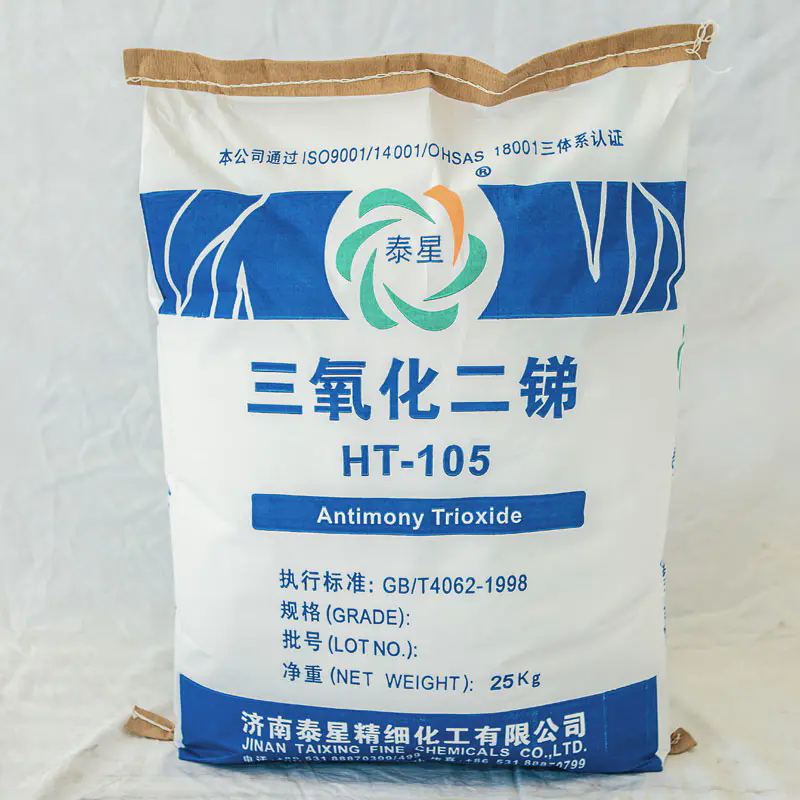
Antimony Trioxide is an inorganic compound commonly used as a synergist in halogen-based flame retardant systems. It does not act as a flame retardant on its own, but significantly enhances the effectiveness of other flame retardant agents by improving char formation and suppressing flame propagation.

Due to its high thermal stability, chemical compatibility, and cost efficiency, Antimony Trioxide has become a standard additive in many industrial formulations. Taixing supplies Antimony Trioxide designed to meet consistent performance requirements in demanding manufacturing environments.


Key Customer Pain Points

Manufacturers using flame retardant systems often encounter challenges related to material performance, regulatory compliance, and production efficiency. Common issues include:

  • Insufficient flame retardant efficiency at low additive levels
  • Negative impact on mechanical properties of polymers
  • Inconsistent dispersion in plastic or rubber matrices
  • Difficulty meeting fire safety standards across markets
  • Batch-to-batch variability affecting product certification

These problems are frequently linked to improper Antimony Trioxide grade selection, poor dispersion control, or unstable raw material quality.


How Antimony Trioxide Works

Antimony Trioxide functions primarily as a synergist with halogenated flame retardants. During combustion, it reacts with halogen compounds to form antimony halides, which interrupt the flame chemistry in the gas phase.

  • Reduces flame temperature
  • Suppresses free radical chain reactions
  • Enhances char layer formation
  • Limits oxygen diffusion to the burning surface

This mechanism allows manufacturers to achieve higher flame retardant efficiency with lower overall additive loading, preserving material properties while meeting safety requirements.


Major Application Areas

Antimony Trioxide is widely used across multiple industries where fire resistance is essential.

  • Plastics such as PVC, ABS, and polypropylene
  • Rubber products including cables and hoses
  • Flame retardant coatings and paints
  • Textiles and synthetic fibers
  • Electrical and electronic components

Each application requires specific particle size control, purity levels, and dispersion performance to ensure optimal results.


How to Choose the Right Grade

Selecting the appropriate Antimony Trioxide grade is critical for performance and processing stability. Key selection criteria include:

  • Particle size distribution
  • Purity and impurity control
  • Surface treatment compatibility
  • Target flame retardant system
  • End-use regulatory requirements

Taixing offers multiple grades of Antimony Trioxide to support diverse application needs, helping customers reduce formulation risks and production variability.


Processing and Performance Factors

Even with the right grade, processing conditions strongly influence Antimony Trioxide performance.

  • Mixing temperature and shear force
  • Dispersion uniformity
  • Compatibility with polymer matrices
  • Interaction with other additives
  • Moisture and contamination control

Proper process control ensures stable flame retardant efficiency without compromising mechanical strength or surface appearance.


Antimony Trioxide Application Table

Application Primary Benefit Typical Form Key Requirement
Plastics Improved flame resistance Fine powder Uniform dispersion
Rubber Heat stability Micro-sized particles Low impurity content
Coatings Fire barrier effect High-purity grade Compatibility with binders
Textiles Durable flame retardancy Dispersible powder Wash resistance

Quality Control and Safety Considerations

Consistent quality is essential for Antimony Trioxide used in regulated industries. Key quality control measures include chemical purity testing, particle size analysis, and thermal stability evaluation.

Taixing implements strict production and inspection procedures to ensure stable supply and reliable performance. Proper handling and storage practices further reduce health and safety risks during manufacturing.


Frequently Asked Questions

Is Antimony Trioxide a flame retardant by itself?
No. It functions as a synergist and must be used with compatible flame retardant agents.

Does Antimony Trioxide affect mechanical properties?
When properly formulated, it minimizes impact on strength and flexibility.

Can Antimony Trioxide be used in different polymers?
Yes, but grade selection and dispersion methods must be adapted to each polymer system.

How can performance consistency be maintained?
Stable raw material quality, controlled processing, and standardized testing are essential.


Conclusion and Contact Us

Antimony Trioxide remains a critical component in effective flame retardant systems, offering proven performance across a wide range of applications. By understanding its working mechanism, selection criteria, and processing requirements, manufacturers can overcome common flame retardant challenges while maintaining product quality and compliance.

Taixing is dedicated to providing reliable Antimony Trioxide solutions with consistent quality and technical support. If you are seeking to improve flame retardant performance or optimize your formulations, contact us today to learn how Taixing can support your production goals and long-term success.

Related News
Leave me a message
X
We use cookies to offer you a better browsing experience, analyze site traffic and personalize content. By using this site, you agree to our use of cookies. Privacy Policy
Reject Accept